Modular 5.5 MWe Biomethane Technology for Industrial Scale Deployment
Pipeline-quality biomethane (97% CH₄) from OFI cactus feedstock — delivering 10,500 m³/day per module with 85% total system efficiency (CHP) and 90-95% availability. Scalable to 22-25 MWe clusters for heavy industry applications.
PROCESS FLOW OVERVIEW
From Degraded Land to Pipeline-Grade Biomethane in 13 Steps
TerraFerm Africa's integrated cactus-to-energy system converts arid, degraded land into firm baseload power and industrial-grade biomethane using proven CSTR anaerobic digestion technology — operational in 20,000+ facilities globally.
CULTIVATION & FEEDSTOCK
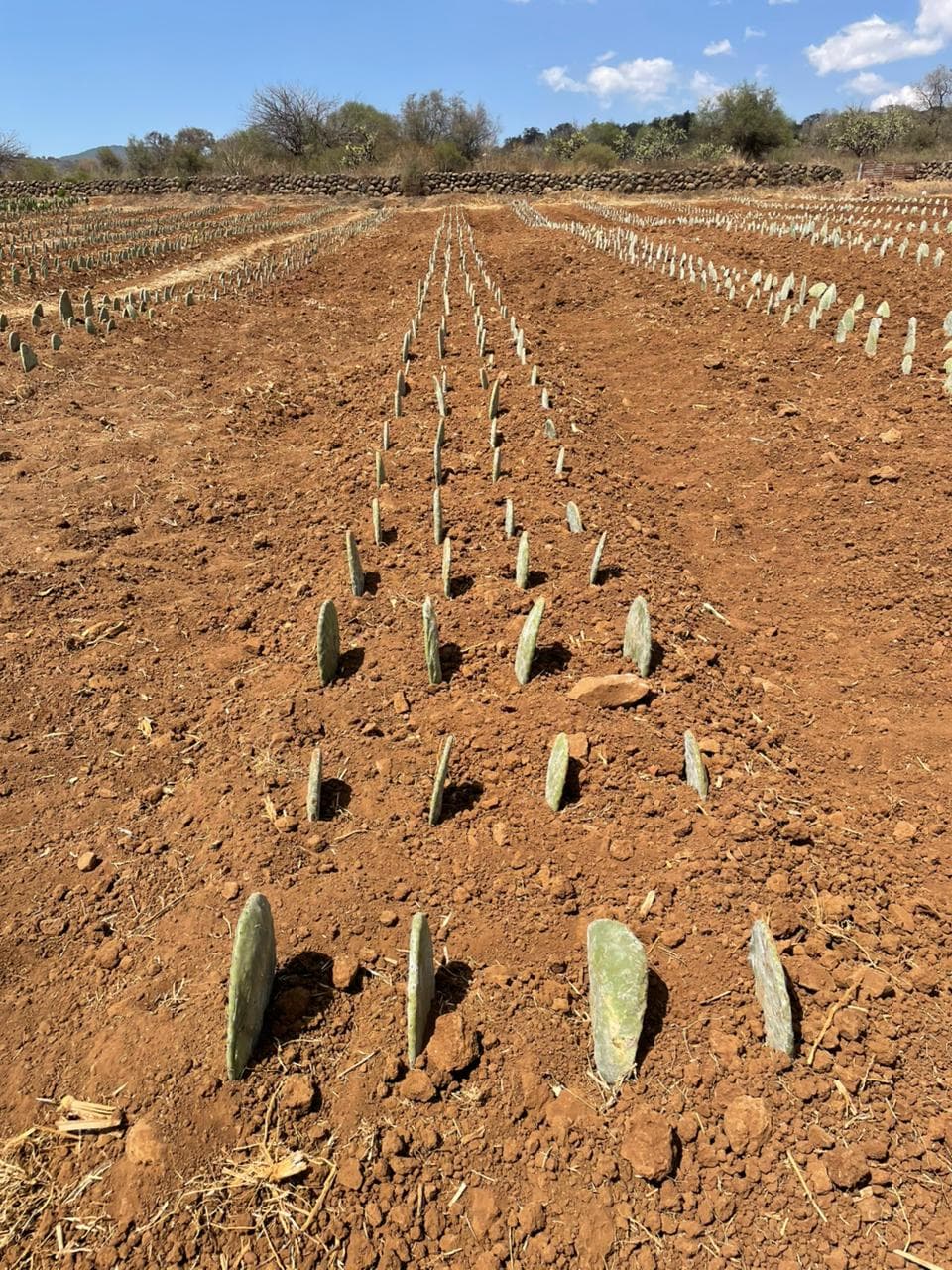
OFI Cactus Cultivation
- Ultra-high-density: 30,000 plants/ha for biomethane feedstock
- Drought-resistant: 300mm annual rainfall requirement
- 40-50 t/ha/yr fresh biomass yield
- 18-24 month harvest cycle maturity
Mechanical Harvesting & Transport
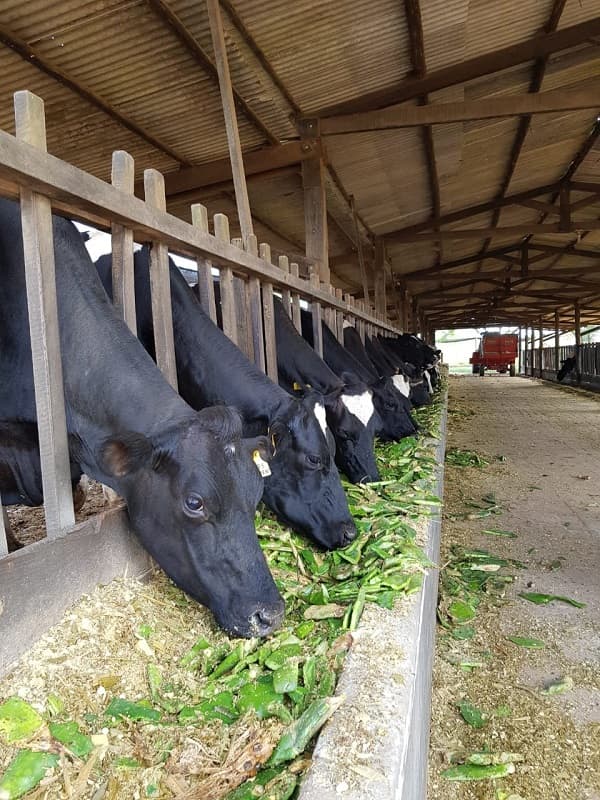
- Truck unloads cactus cladodes into reception hopper
- 30-degree incline conveyor (800mm rubber belt)
- Steel frame, variable speed motor
- Galvanized steel/HDPE hopper (1m³) with grate and rubber seals
PREPROCESSING
Reception & Size Reduction
- Mild steel shredder housing with safety interlocks
- Hardened steel blades (50mm output particle size)
- Stainless steel grate and rubber seals
- Feeds directly into digester input
Continuous Stirred-Tank Reactor (CSTR)
- 5m dome-covered vertical steel anaerobic digester tank
- Two REMEX agitators for continuous mixing
- Integrated yellow biogas storage dome
- Operating temperature: 35-38°C (mesophilic)
- Hydraulic retention time (HRT): 21-28 days
- Volume: 2,500-3,500 m³ per 5 MWe
BIOGAS MANAGEMENT
Pump Room (Enclosed)
- Small enclosed housing for digestate pumps
- Stainless steel pump units
- Automated flow control systems
Post-Digester Storage
- 5m dome-covered vertical steel post-digester tank
- One agitator for digestate homogenization
- Additional biogas collection (secondary fermentation)
Solid-Liquid Separator
- Mechanical separator unit
- Separates liquid digestate from solid fraction
- Solid output: 25-30% dry matter content
Solid Digestate Storage
- Open-air composting piles
- High-quality organic fertilizer (NPK + micronutrients)
- 5-10 tCO₂e/ha/yr soil carbon sequestration when applied
Liquid Digestate Storage
- Half-full liquid storage tank (underground or above-ground)
- Recirculation to maintain digester moisture content
- Excess used as liquid fertilizer (fertigation)
UPGRADING & GENERATION
Biogas Collection & Piping
- Low-pressure biogas piping (60% CH₄ raw biogas)
- Desulfurization (H₂S removal to <100 ppm)
- Moisture removal (condensate traps)
Biogas Upgrading to Biomethane
- Pressure Swing Adsorption (PSA) or membrane separation
- CO₂ removal: 60% CH₄ (raw biogas) → 97% CH₄ (biomethane)
- Output: 10,500 m³/day pipeline-grade biomethane per 1 MWe
- Methane content: 97%+ (pipeline-grade)
- Calorific value: 35-38 MJ/m³
- H₂S: <5 ppm (odorization-ready)
- Moisture: <100 mg/m³
Combined Heat & Power (CHP) Generation
- 0.13-5.5 MWe Jenbacher gas turbine package
- Electrical efficiency: 42% | Thermal efficiency: 43%
- Total CHP efficiency: 85%
- Availability: 90-95% (7,884-8,322 hrs/yr)
- Modular: Scalable to 22-25 MWe clusters
Biomethane Pipeline / Grid Connection
- Option A: Pipeline injection to industrial off-taker
- Option B: Grid-connected 24/7 baseload power (Eskom MV 11kV)
- Option C: Behind-the-meter (BTM) for on-site consumption
- Option D: Dual-use (biomethane export + on-site CHP)
TECHNICAL SPECIFICATIONS
Engineering Specifications — Industrial-Grade Performance
Module Configuration: 5.5 MWe Standard Unit
| Parameter | Specification | Notes |
|---|---|---|
| Nameplate Capacity | 5.5 MWe (electrical) | Scalable to 22-25 MWe clusters |
| Biomethane Output | 57,750 m³/day (5.5 MWe module) | 10,500 m³/day per 1 MWe |
| Feedstock Requirement | 220-275 t/day fresh cactus | 40-50 t/ha/yr yield @ 500-550 ha |
| Land Footprint | 500-550 ha (cultivation) + 5-8 ha (processing) | Ultra-high-density: 30,000 plants/ha |
| Water Requirement | 1,200-1,500 m³/day (drip irrigation) | 80% less than conventional bioenergy crops |
| CSTR Digester | ||
| Volume | 15,000-19,000 m³ total (5.5 MWe) | Modular: 2,500-3,500 m³ per MWe |
| Retention Time (HRT) | 21-28 days | Mesophilic anaerobic digestion |
| Operating Temperature | 35-38°C | Electrically heated (waste heat recovery from CHP) |
| Biogas Yield | 180-220 m³ biogas/t fresh biomass | 60% CH₄ raw biogas |
| Agitation | REMEX continuous mixing | Prevents stratification, optimizes contact |
| Biogas Upgrading | ||
| Technology | Pressure Swing Adsorption (PSA) | Alternative: Membrane separation |
| Input | 60% CH₄ raw biogas | Desulfurized (<100 ppm H₂S) |
| Output | 97%+ CH₄ biomethane | Pipeline-quality, odorization-ready |
| CH₄ Recovery | 98-99% | <1-2% methane slip |
| Calorific Value | 35-38 MJ/m³ | Equivalent to natural gas/LNG |
| Pressure | 4-8 bar | Suitable for pipeline injection |
| CHP Generation | ||
| Engine Options | Option A: Jenbacher JMS 312/320 Option B: MTU 4000/4R Series Option C: Caterpillar CG132/170 Option D: MWM TCG 2020 | Industry standard, 40+ years biogas track record Rolls-Royce reliability, marine-grade durability Mining industry heritage, global service network High efficiency, compact footprint |
| Electrical Efficiency | 40-43% | Depends on engine model/configuration |
| Thermal Efficiency | 42-45% | 120-180°C process heat available |
| Total CHP Efficiency | 85-88% | When heat is fully utilized |
| Start-up Time | <2 minutes | Cold start to full load (backup-grade) |
| Availability | 90-95% | 7,884-8,322 operating hours/year |
| Service Interval | 40,000-60,000 hrs | Major overhaul (engine-dependent) |
| Emissions | <500 mg/Nm³ NOx, <650 mg/Nm³ CO | EU Stage V / Tier 4 Final compliant |
| Performance | ||
| Capacity Factor | 85-92% | Firm baseload generation |
| Carbon Intensity | -58 kgCO₂e/GJ (net negative) | Soil sequestration + avoided emissions |
| Jobs Created | 50-55 per 5.5 MWe | 12-15 per 1 MWe (60% unskilled) |
| CAPEX | R180-220M per 5.5 MWe | ~R33-40M per MWe installed |
| OPEX | R12-18M/year per 5.5 MWe | Including feedstock cultivation |
| Deployment | ||
| Engineering Timeline | 6-9 months (FEED + detailed design) | From PPA signature to FID |
| Construction Timeline | 12-18 months | Site prep + civil + equipment install |
| Total Project Duration | 18-24 months | PPA to commissioning |
| Operational Life | 25-30 years | Equipment refresh at 15-20 years |
BIOMETHANE SPECIFICATIONS
Pipeline-Quality Biomethane — Industrial Fuel Replacement
TerraFerm Africa's biomethane meets or exceeds South African National Standards (SANS 1688) for natural gas quality and is suitable for direct injection into gas pipelines or industrial boiler/turbine applications.
| Parameter | TFA Biomethane | SANS 1688 (Pipeline Gas) | Natural Gas/LNG |
|---|---|---|---|
| Methane (CH₄) | 97-98% | >95% | 85-95% |
| Calorific Value | 35-38 MJ/m³ | 34-40 MJ/m³ | 35-40 MJ/m³ |
| Wobbe Index | 48-52 MJ/m³ | 46-53 MJ/m³ | 47-51 MJ/m³ |
| Hydrogen Sulfide (H₂S) | <5 ppm | <10 ppm | <5 ppm |
| Total Sulfur | <20 mg/m³ | <50 mg/m³ | <30 mg/m³ |
| Water Content | <50 mg/m³ | <100 mg/m³ | <80 mg/m³ |
| Oxygen (O₂) | <0.5% | <1% | <0.5% |
| CO₂ | <3% | <5% | 1-5% |
| Pressure | 4-8 bar (adjustable) | 4-10 bar | 4-70 bar |
| Temperature | 10-25°C | 5-30°C | 10-30°C |
Compliance & Standards
COMPETITIVE ADVANTAGES
Why OFI Cactus Outperforms Alternative Biogas Feedstocks
| Feedstock | Land Use | Water Use | Biogas Yield | Carbon Intensity | Suitability for Arid SA |
|---|---|---|---|---|---|
| OFI Cactus (TFA) | 100 ha/MWe | 300mm/yr | 180-220 m³/t | -58 kgCO₂e/GJ | Optimal (thrives on degraded land) |
| Maize Silage | 150-200 ha/MWe | 600-800mm/yr | 200-250 m³/t | +45 kgCO₂e/GJ | Competes with food, water-intensive |
| Sugar Beet | 120-150 ha/MWe | 500-700mm/yr | 180-210 m³/t | +38 kgCO₂e/GJ | Requires fertile soil, irrigation |
| Grass Silage | 200-250 ha/MWe | 400-600mm/yr | 170-200 m³/t | +35 kgCO₂e/GJ | Lower yield, requires good soil |
| Municipal Organic Waste | N/A (waste stream) | N/A | 100-150 m³/t | -15 kgCO₂e/GJ | Supply inconsistency, contamination risk |
| Animal Manure (Cattle) | N/A (waste stream) | N/A | 60-80 m³/t | -10 kgCO₂e/GJ | Low yield, odor issues, pathogen risk |
OFI Cactus Advantages
SCALABILITY & MODULARITY
From 5.5 MWe Modules to 300 GWe Regional Capacity
Phase 1: Single Module Validation (5.5 MWe)
- Timeline:18-24 months from PPA to commissioning
- Land:500-550 ha OFI cultivation + 5-8 ha processing facility
- Output:5.5 MWe baseload + 57,750 m³/day biomethane
- Jobs:50-55 permanent (construction: 200-300 temporary)
- CAPEX:R180-220M
Typical Applications
- Small mine (5-10 MW demand)
- Industrial park (8-12 MW demand)
- District municipality (10 MW peak)
- SEZ anchor tenant
Phase 2: Cluster Scale (22-25 MWe)
- Timeline:36-48 months (4-5 modules phased deployment)
- Land:2,200-2,750 ha OFI cultivation + 20-30 ha processing
- Output:22-25 MWe baseload + 231,000-262,500 m³/day biomethane
- Jobs:220-275 permanent
- CAPEX:R720-1,100M
Typical Applications
- Large mine (25-50 MW demand)
- Heavy industry facility (Sasol, AECI scale)
- Multiple SEZ tenants
- Municipal cluster (3-5 municipalities)
Phase 3: Regional Deployment (100-300 GWe by 2040)
- Target:23M+ hectares across Southern Africa
- Output:2,280 GWe theoretical (342-570 GWe realistic rollout 15-25%)
- Jobs:2M+ permanent (1.2M unskilled, 600k semi-skilled, 200k skilled)
- Carbon Impact:120M+ tCO₂e sequestered/year at scale
TECHNOLOGY PARTNERS & PROVEN TRACK RECORD
Built on Proven Technology — 20,000+ Biogas Plants Operating Globally
Technology Partnership Ecosystem
Anaerobic Digestion
- REMEX (Germany)
Agitation systems, mixing technology - BioConstruct (Germany)
CSTR digester design & engineering - Weltec Biopower (Germany)
Turnkey biogas plant integration
Biogas Upgrading
- DMT Environmental (NL)
Membrane separation - Xebec Adsorption (Canada)
Pressure Swing Adsorption (PSA) - Greenlane Renewables (Canada)
Water scrubbing technology
CHP Generation
- Jenbacher (Austria)
Gas engines (JMS 312, 320, 416) - MTU/Rolls-Royce (Germany)
Biogas gensets (4000, 4R series) - Caterpillar (USA)
Biogas gensets (CG132, CG170)
Process Control
- Siemens (Germany)
SCADA systems, PLC control - ABB (Switzerland)
Electrical systems, motor control - Endress+Hauser (Switzerland)
Process instrumentation
Global Biogas Industry Context
20,000+ biogas plants operating worldwide:
- • Europe: 18,500+ plants
- • Asia: 50M+ household digesters
- • North America: 2,200+ plants
- • Latin America: 500+ plants
- • Africa: <200 plants
Proven Technology Maturity:
- ✅IEA Technology Readiness Level (TRL): 9/9 (fully commercial)
- ✅Operating track record: 40+ years
- ✅Bankability: Project financed by major European banks
- ✅Insurance: Performance guarantees available
TFA Differentiation
While anaerobic digestion is proven, TFA's innovation is the feedstock:
- 1First commercial-scale OFI cactus-to-biomethane deployment in Africa
- 2Adaptation of proven EU biogas technology to arid climate feedstock
- 3Steelpoort pilot validates cultivation → AD → CHP integration
ENVIRONMENTAL PERFORMANCE
Net Carbon-Negative Energy Generation
Lifecycle Carbon AnalysisCarbon Balance per 5.5 MWe Module (Annual)
Carbon Sequestration (+)
- Soil organic carbon restoration (60 tCO₂e/ha × 550 ha)33,000 tCO₂e/yr
- Avoided Eskom coal displacement (960 gCO₂/kWh)46,000 tCO₂e/yr
- Avoided diesel displacement9,400 tCO₂e/yr
- TOTAL SEQUESTRATION79,000-88,000 tCO₂e/yr
Carbon Emissions (-)
- Diesel for harvesting/transport200-300 tCO₂e/yr
- Electricity for processing (parasitic load)150-200 tCO₂e/yr
- Digestate management50-100 tCO₂e/yr
- Fugitive methane emissions (1-2% slip)500-800 tCO₂e/yr
- TOTAL EMISSIONS900-1,400 tCO₂e/yr
Net Carbon Removal
per 5.5 MWe Module
Carbon Intensity Comparison
Carbon Credit Revenue
- ▸Verra VCS methodology: VM0042 (Soil Carbon)
- ▸Gold Standard: Renewable Energy + Land Use
- ▸Voluntary carbon market: $15-30/tCO₂e current, $50-100/tCO₂e projected (2030)
- Annual Credit Revenue: $1.2-2.6M
per 5.5 MWe @ current pricing
CALL TO ACTION
Deploy Proven Biomethane Technology at Your Site
Request technical specifications, project economics, and site-specific feasibility assessment for OFI cactus-based biomethane deployment.
Technical Documentation
Download detailed engineering specifications, equipment datasheets, and process flow diagrams.
Financial Models
Access CAPEX/OPEX breakdowns, IRR sensitivity analysis, and project finance structures.